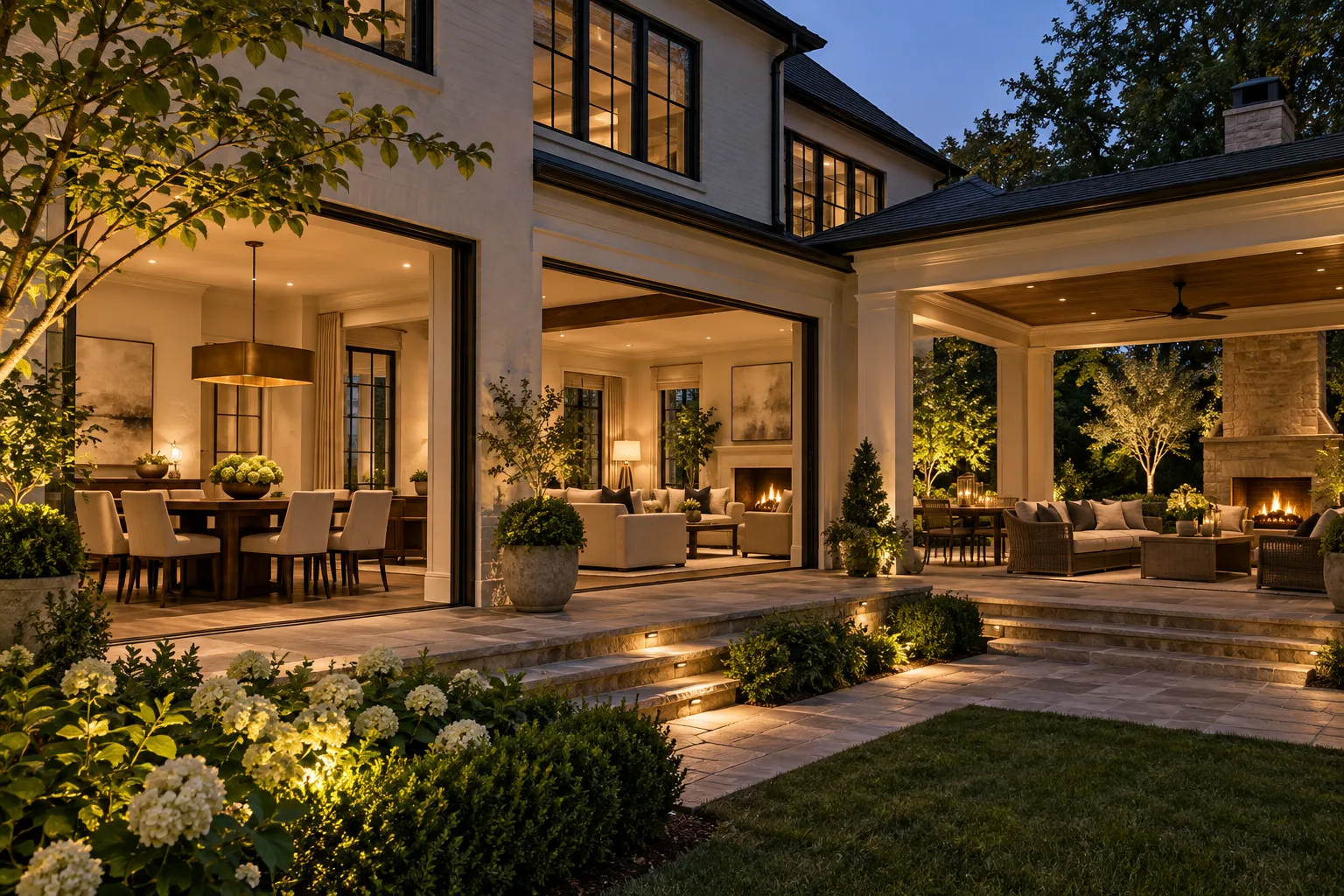
A whole-home automation project begins with decisions about everyday living: how you arrive, which spaces you use together, what guests should be able to control, and how the home should behave when you are away. Equipment follows those decisions.
If you are planning whole-home automation in North Georgia for 2027, the most valuable work can happen before a controller or touchscreen is selected. A coordinated plan connects lighting, shades, climate, entertainment, access, and networking into an experience your household can understand.
What does whole-home automation include?
The scope varies by property. It may bring together lighting scenes, motorized shades, distributed audio, television controls, thermostats, selected security and access functions, and remote system access. The goal is consistent operation across compatible systems, with clear boundaries for functions that remain separate.
A simple evening scene illustrates the idea: selected lights change together, living room shades move to their agreed position, and music starts in chosen rooms. Control4's documentation describes programmable keypads that can coordinate lighting, audio/video, blinds, and other supported functions. The exact actions available depend on the installed equipment and programming. See Control4's explanation of switches, dimmers, and keypads.
A house with many connected products is not automatically a coordinated home. The integration work is what makes the separate parts usable together.
Start with a room-by-room brief
For each room, list the activities it needs to support and the controls people naturally reach for. Include the places that are easy to miss: a covered porch, guest suite, garage entry, equipment closet, or detached workspace.
Choose a small set of shared scenes, such as arrival, dinner, entertaining, and bedtime. Specify what each scene changes and what it leaves alone. A bedtime scene might adjust shared-space lighting while preserving independent control in an occupied guest room.
This brief gives an installer something more useful than a general request for the latest technology. It also creates a reference for deciding whether an emerging feature is worth including.
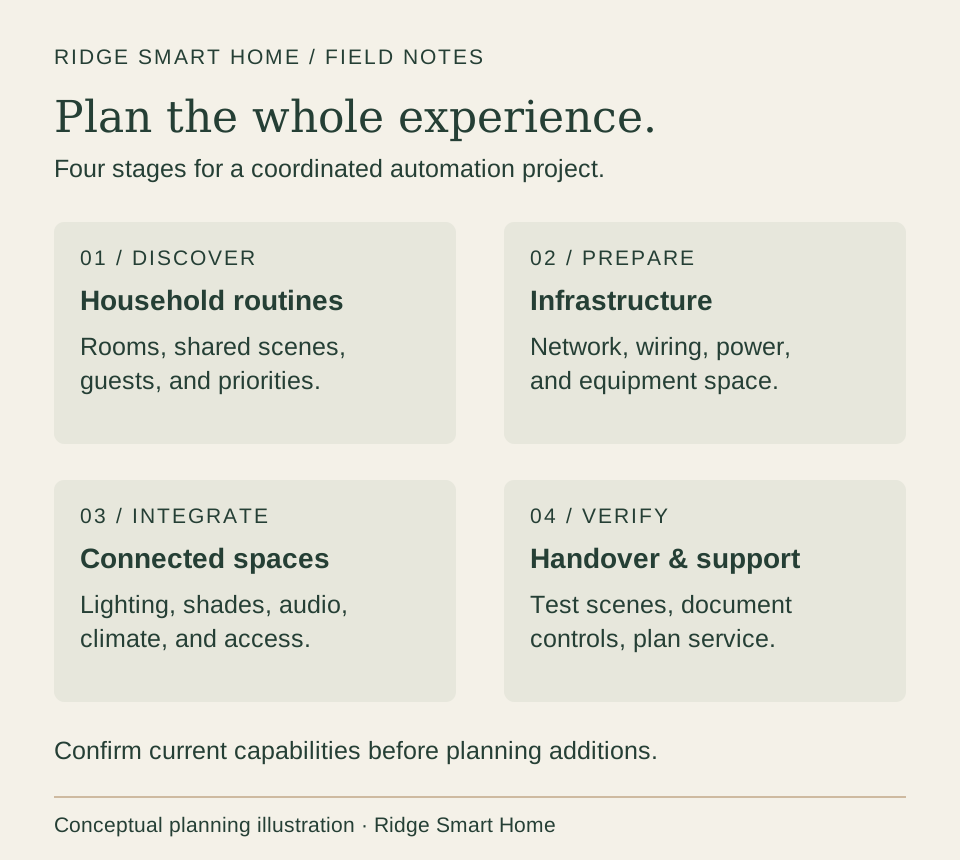
Four stages of a coordinated project: define daily use, plan infrastructure, integrate rooms, and verify the finished experience.
Plan the infrastructure before the finishes
For new construction or a major renovation, coordinate network locations, equipment space, cable routes, shade power, speaker positions, and control locations while changes are easier to accommodate. Share the plan with the builder and relevant trades. An attractive keypad location is of limited value if it conflicts with a door swing or furniture arrangement.
For an existing home, begin with an assessment rather than assuming every wall must be opened. Some improvements may use existing infrastructure or suitable wireless products; others benefit from new wiring. The right mix depends on access, reliability requirements, and the system chosen.
A strong home network and Wi-Fi design supports the installation. Discuss coverage, wired connections where appropriate, equipment ventilation, service access, and documented ownership of network accounts. Leave practical room for maintenance and future changes.
Match the design to the North Georgia property
Canton, Woodstock, and Kennesaw: connected everyday living
For a suburban luxury home, the priorities may include coordinated kitchen and living areas, a home office, a media room, and outdoor entertaining. Plan audio zones so an evening on the terrace does not change the experience inside. Coordinate lighting and motorized shades with the interior design rather than treating them as a separate gadget purchase.
Explore Ridge's local planning pages for Canton, Woodstock, and Kennesaw.
Ellijay, Blue Ridge, and Jasper: mountain homes and retreats
For a mountain property, consider arrival after dark, remote awareness, guest access, and the behavior of important controls during an internet interruption. Large windows, timber, and stone can influence both the visual placement of technology and the practical installation approach. Evaluate the actual property rather than relying on a standard package.
Local starting points include Ellijay, Blue Ridge, and Jasper. Our winter readiness article provides a separate checklist for power and connectivity planning.
How should you choose a whole-home automation platform?
Savant, Control4, Crestron, and KNX can enter the discussion, but they should not be treated as interchangeable packages. Evaluate the proposed system against the actual lighting, shading, HVAC, entertainment, and access equipment. Ask which functions are native, which need an integration, and who maintains that integration.
Request a demonstration of the controls your household will use. Compare the experience of a wall keypad, a remote, an app, and any proposed voice interface. Include guests and household members who prefer simple physical controls in that decision.
Where do AI and emerging technology fit in a 2027 plan?
Leave room for useful additions while making the core installation work with confirmed capabilities. AI-assisted requests may offer convenience; presence sensing may make room behavior more responsive. Neither should obscure basic questions about manual control, privacy, subscriptions, or support.
Ask the installer to distinguish features included at handover from possible future additions. Avoid building a daily routine around an unconfirmed software release. Our guides to AI home automation and presence sensing explain those decisions in more detail.
How much does whole-home automation cost?
There is no useful single price without a scope. Room count, wiring access, lighting loads, shade quantities, audio zones, equipment choices, programming, and ongoing services all affect the proposal. Ask for an itemized scope and identify any recurring fees.
A phased project can begin with infrastructure and a few high-value rooms, provided later additions are considered from the start. Ridge's budgeting and project phases guide can help organize that conversation.
What should happen before handover?
Walk through the agreed scenes in the actual rooms. Test guest use, manual overrides, remote access, and relevant failure conditions. Receive a clear record of equipment, account ownership, routine operation, and support contacts. Confirm which updates or adjustments are included and how more involved work is handled.
Ridge includes basic support for the first two years, with an optional paid package for more involved support. The scope should be documented for your project. Review systems and support, then start planning your whole-home installation.
Planning guidance reviewed October 7, 2026. References to 2027 describe project planning, not promised future product releases.