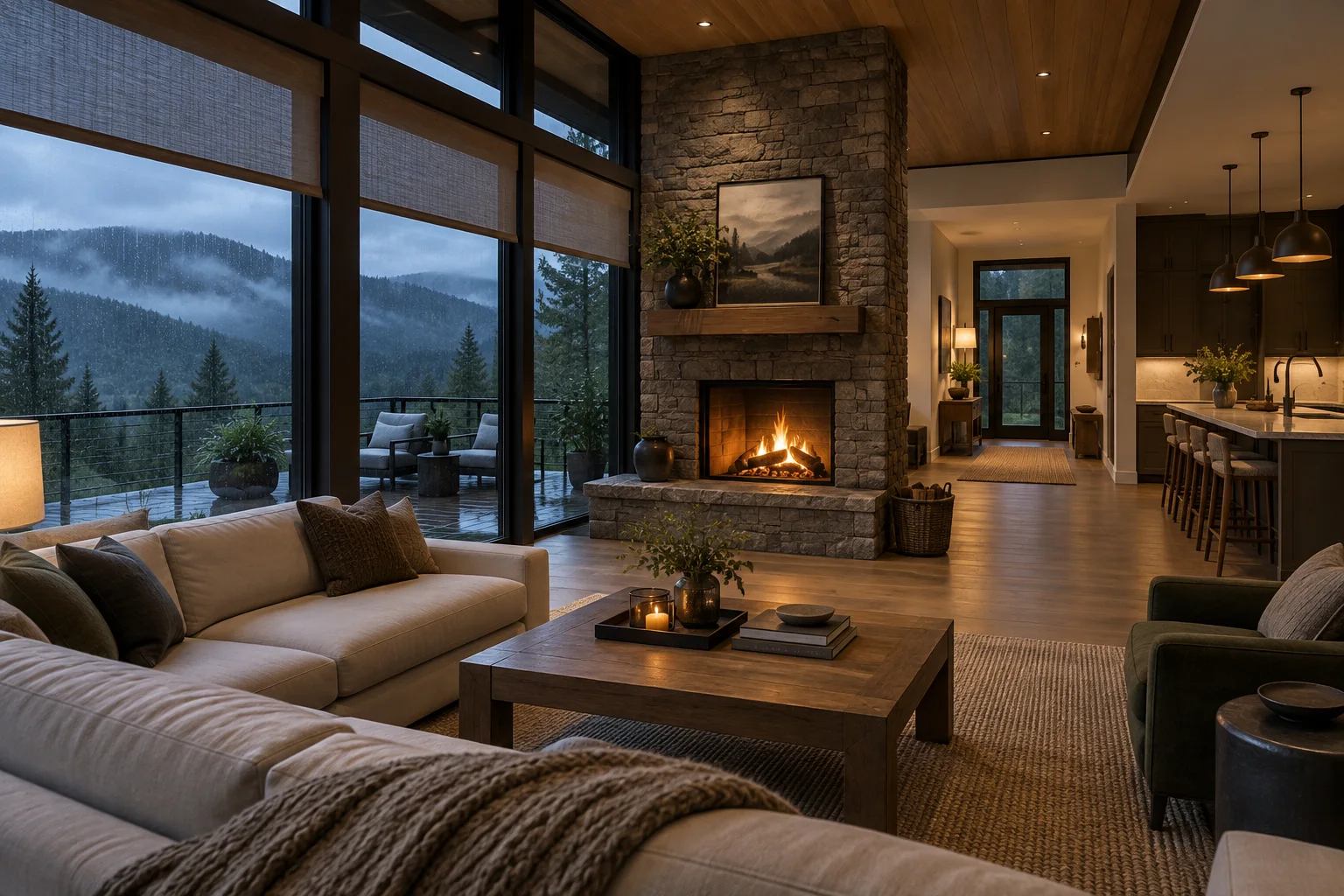
Predictions have a way of making homes sound like science fiction. In practice, the meaningful changes are usually quieter.
By 2027, we expect the strongest smart homes to be judged less by how much they can do and more by how little attention they require. The interesting future is not a house that performs a different trick every morning. It is one that is easier to understand, more dependable in the background, and more considerate of the people who live there.
This is an outlook, not a product roadmap. Specific availability and compatibility will always need to be checked for the home, the platform, and the products involved. But the direction is becoming clear: better foundations, more useful interoperability, and a much higher standard for technology that earns a place in daily life.
The headline will be less, not more
For years, smart-home conversation has been shaped by novelty: another app, another assistant, another device that can be controlled from a phone. By 2027, the more valuable question will be whether all of that has become simpler.
The winning experience will not ask a homeowner to remember which app controls which room. It will bring ordinary actions closer together: an obvious switch, a familiar keypad, a simple scene, a reliable remote, and the option of a phone or voice command when those are genuinely helpful. A house does not become thoughtful because it has more control methods; it becomes thoughtful because the right method is available at the right moment.
That also means the physical layer matters. Good controls will continue to be important because they are understandable at a glance, work for guests, and do not require a charged phone or a remembered password. The future is likely to feel more architectural and less like a collection of gadgets.
Infrastructure will come into view
The invisible parts of a smart home are becoming more important, not less. High-quality Wi-Fi, wired backhaul where appropriate, dependable power, sensible equipment locations, and well-planned low-voltage pathways will increasingly determine whether a connected home feels effortless.
This is especially true as homes carry more connected products: cameras, streaming systems, access controls, speakers, lighting, shades, sensors, appliances, and the phones that manage them. A strong network is not a separate technology project hiding in a closet. It is part of the experience in every room.
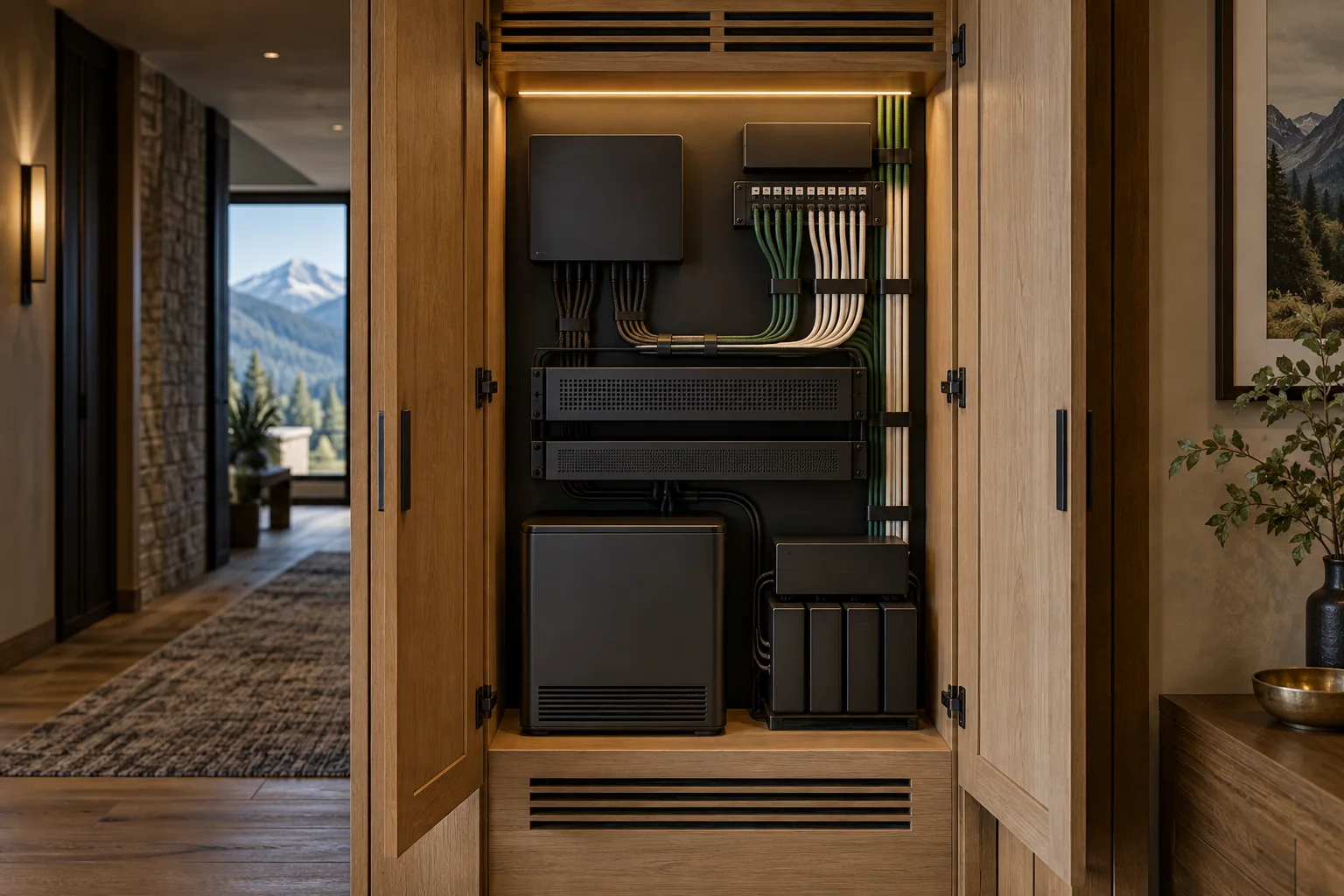
Future-ready homes are built on the quiet infrastructure that makes the visible experience feel effortless.
For new builds and renovations, 2027 planning should still begin before walls close. Ask about access-point locations, structured wiring, equipment space, power at window treatments, and routes that preserve choices for later. For existing homes, a survey of coverage, wiring access, and the rooms that matter most can reveal where a careful upgrade will have the greatest effect.
Standards will be useful—but not magical
Interoperability is moving in the right direction. Matter, for example, continues to expand the kinds of devices and capabilities it can address, while Thread offers a low-power mesh-network option for compatible products. These developments can make it easier for some devices to join a broader home experience.
But “compatible” is not the same as “identical.” A product may support a shared standard while retaining features in its own app or platform. A particular automation, privacy setting, camera capability, shade control, or energy feature may vary by manufacturer and controller. That is not a reason to avoid standards; it is a reason to plan with precision.
The practical 2027 approach is to choose a foundation that fits the home, then verify the specific experiences you want. Can the control you care about work from the place you expect? Is everyday use still clear if an internet service changes? Who owns the account? What will be documented at handover? These questions are more useful than a logo on a box.
Resilience will become part of the luxury
The better connected a home becomes, the more important graceful fallback becomes. A beautiful system should account for the ordinary disruptions that happen in real life: a phone left in another room, a guest at the door, a password that needs resetting, an internet interruption, a power event, or a change in household routine.
By 2027, homeowners will increasingly expect core functions to remain understandable under imperfect conditions. That does not mean every feature will operate the same way offline, nor should anyone promise that it will. It means the design should be explicit about which controls are physical, which functions are local, which use remote services, and how the household will recover access if something changes.
Reliability is rarely a glamorous feature. It is one of the clearest signs that a system was designed around the home rather than around a demonstration.
Energy awareness will become more human
Energy management is moving beyond a screen full of numbers. In the next stage, the useful question is not simply how much a home consumed; it is how the home can respond to the preferences of the people inside it.
Light and shade control can help a space feel more comfortable through changing sun. Climate can be scheduled around occupancy and seasonal patterns. Electric-vehicle charging, solar production, batteries, and time-of-use utility rates may become relevant parts of a home’s energy conversation where they are available and appropriate. The goal is not to make every homeowner watch a dashboard. It is to give them understandable choices about comfort, cost, and control.
The most considerate systems will make those choices visible when they matter and quiet when they do not. An automation should never become a small daily negotiation with the house.
AI will be judged by its manners
Artificial intelligence will undoubtedly enter more smart-home products and services. The useful versions will be the ones with good manners.
That could mean making a complex control easier to phrase, helping a homeowner understand an alert, or suggesting a routine based on an explicitly chosen preference. It should not mean a home making surprising decisions about privacy, access, comfort, or family life. The closer a technology comes to the everyday rhythms of a home, the more important permission, explanation, and the ability to say no become.
In 2027, a smart assistant will be worth having if it reduces friction without becoming another system to manage. The design test is simple: can someone understand what it did, change it, and turn it off? If not, the intelligence is not serving the household.
Privacy and access will be design questions
Smart locks, cameras, sensors, remote access, and household accounts make privacy and security part of the initial conversation—not a box to tick at the end. Who is allowed into which system? How are guests handled? Where does footage live? Which alerts are genuinely useful? What happens when a household member changes phones, moves away, or needs access restored?
There is no one answer for every home. There should, however, be a clear answer for each installed system. A well-planned handover includes everyday controls, account ownership, recovery information, and a path for support. That level of clarity will feel increasingly essential as connected homes become more capable.
What to plan now for a 2027-ready home
The future does not require buying everything at once. It asks for a good first move.
If you are building or renovating, protect the options that are hard to add later: network wiring, equipment space, accessible power, shade planning, and practical control locations. If you are improving an existing home, begin with the systems that shape your daily experience most—often network coverage, lighting, entry, comfort, or entertainment. Then decide what should connect, what should remain simple, and what can wait.
The most future-ready home will not be the one with the longest equipment list. It will be the one with a clear foundation, familiar controls, room to evolve, and technology that remains in service of the life happening inside it.
That is a future worth planning for.