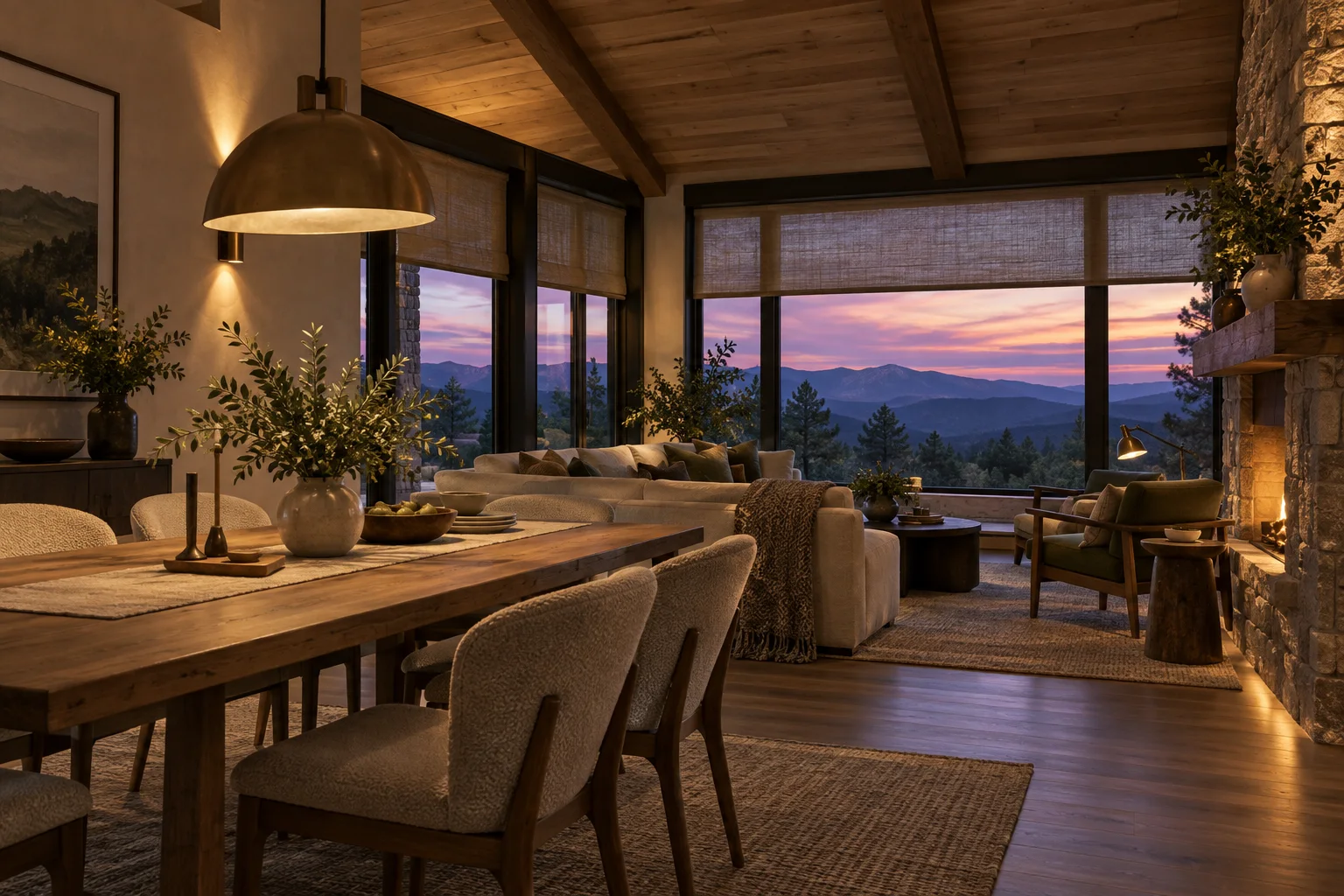
Light is usually the first thing a room says. It tells you whether to slow down, settle in, cook, read, host, or head upstairs for the night. It changes the character of the same walls and furniture without moving a single thing.
That is why lighting is often the most meaningful place to begin a smart-home project. Not because a phone should replace a switch, but because a considered lighting system can help a home meet the moments already happening inside it.
The good version is quiet. You notice that a room feels right; you do not notice the technology performing for you.
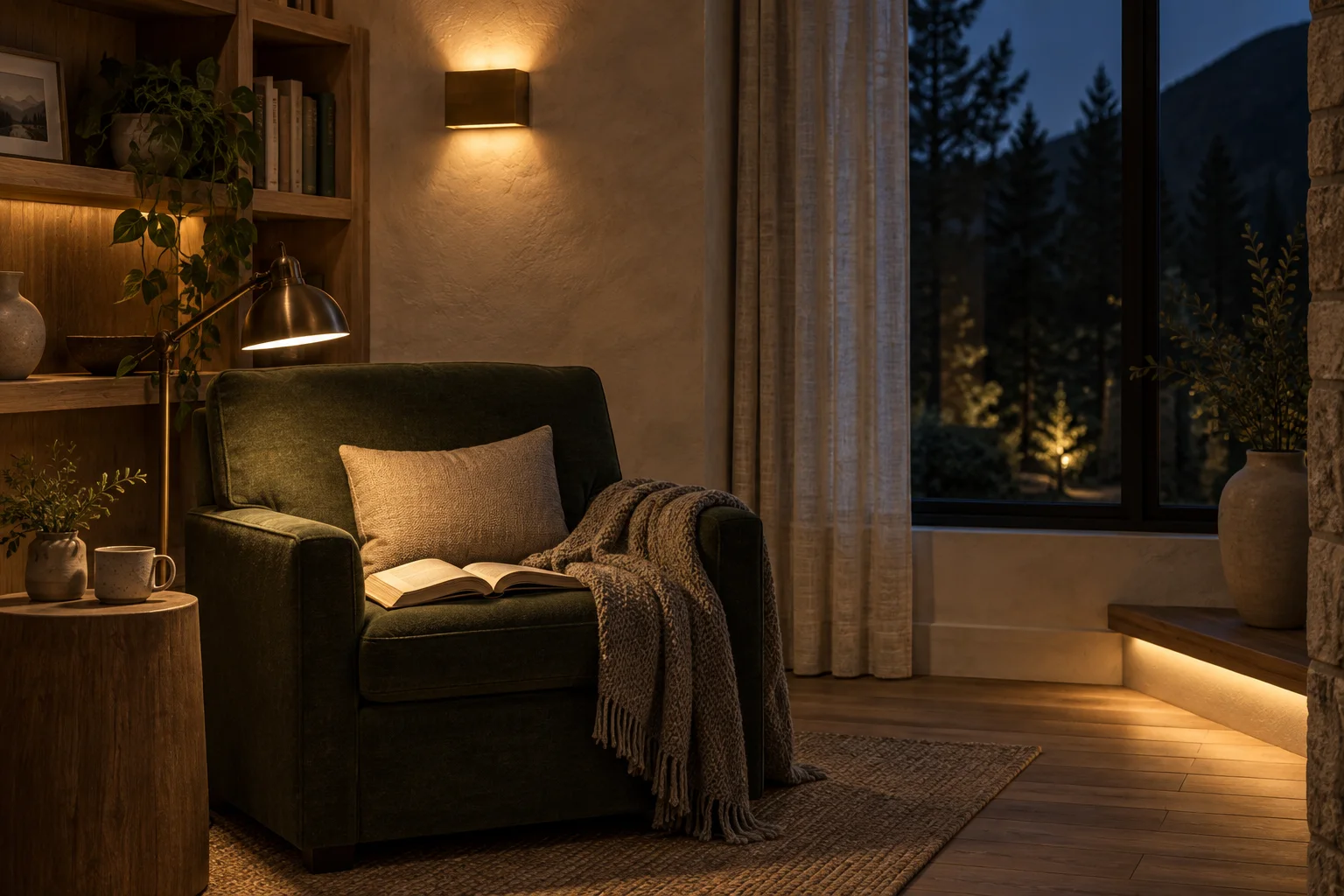
The difference is not more light. It is the right light, in the right place, at the right time.
A room needs more than one kind of light
The simplest lighting plan is often one bright overhead fixture. It is useful when you are looking for something under a cabinet or cleaning before guests arrive. It is rarely the whole story.
Most rooms feel better with layers. There may be a general ambient level that lets people move comfortably. A pendant or table lamp can make a table, book, or conversation feel more intentional. A wall wash can bring out texture. Low-level light can make a hallway or stair useful after dark without waking the whole house.
The goal is not to fill every ceiling with fixtures. It is to give each room a range of possibilities. A kitchen might need clear working light at breakfast, a softer setting for an evening meal, and a gentle route to the refrigerator after everyone is asleep. A living room may need a brighter setting for conversation, a calmer one for a film, and a reading light that does not take over the entire room.
When those layers are planned together, a room can change its character without becoming complicated to use.
Scenes are a shortcut to a feeling
“Scene” can sound technical, but it is really just a useful name for a familiar state of the room.
Think of morning, cooking, dinner, reading, movie, goodnight, or away. Each can bring a few lights, shades, and in some cases other compatible systems into a thoughtful position with a single action. The best scene names are plain enough that anyone in the household understands them immediately.
Scenes are not about automation for its own sake. They are about reducing the tiny sequence of decisions that interrupts a routine. Instead of crossing a room to adjust two lamps, opening an app for shades, and remembering which switch controls the hallway, a single familiar control can set the mood. The household remains in charge; the room simply becomes easier to prepare.
The sun is part of the lighting plan
Artificial light does not begin at sunset. The daylight entering a room—the direction, brightness, heat, glare, and privacy it brings—is part of the same experience.
That is where motorized shades can become genuinely useful. They can soften afternoon glare on a screen, protect a view without erasing it, add privacy as evening arrives, or help a bedroom feel restful at the beginning and end of a day. Paired with lighting, shades allow a scene to respond to the full room rather than just its fixtures.
The aim is not to make windows move on their own all day. It is to make the useful moments effortless: a dining room that is ready for dinner, a bedroom that feels calm before sleep, or a sun-facing room that stays comfortable without the household constantly negotiating with the light.
Controls should still feel familiar
An elegant lighting system should not make the basic action of turning on a light more difficult. Wall controls matter because they are where people naturally look first. A guest should be able to find the right light without asking for an app. A family member should be able to change a room’s mood without memorizing an instruction.
That is why physical controls, clear labels, and sensible placement deserve as much attention as the equipment behind the wall. A keypad near an entry might offer the few scenes that make sense for that zone. A bedside control can keep the route to sleep simple. A kitchen can keep ordinary task lighting obvious while offering an evening setting when the day winds down.
Mobile and voice control can be useful additions, especially when hands are full or you are away. They are most successful as an extra layer of convenience, not the only way the home works.
Let rooms be different
One of the fastest ways to make a home feel impersonal is to give every room the same kind of light. A hallway does not need the same atmosphere as a bath. A home office does not ask for the same light as a den. A covered porch, a kitchen island, and a primary bedroom each carry a different rhythm.
Thoughtful planning makes room for those differences. It considers what happens there, what can be seen from there, when the room is used, who uses it, and how the light should relate to its materials. Stone, oak, art, cabinetry, fabric, and outdoor views can all become more present when the lighting has a purpose.
Smart control adds value when it helps preserve that intention over the day. A room does not need a hundred options. It needs a few good ones that can be reached naturally.
Start with the moments worth improving
If you are considering a lighting upgrade, begin with a short list of the moments that matter most. Perhaps it is arriving home after dark. Perhaps it is cooking while people gather in the kitchen. Perhaps it is a hallway that is too bright at night, a living room that feels flat, or a bedroom that never quite settles.
Bring photos, floor plans, and a description of those moments into the conversation. In a new build or renovation, early planning can protect choices around fixture locations, control points, shade power, and wiring. In an existing home, the work begins with the current layout, accessible routes, and the level of change that makes sense for the house.
You do not need to decide every fixture before starting. You do need a clear sense of how you want the home to feel.
The most memorable technology often disappears
People rarely remember the name of a lighting system after a good evening at home. They remember the welcome at the door, the table that made conversation linger, the view that stayed visible, or the ease of finding their way through a darkened house.
That is the standard worth designing for. The technology should serve the atmosphere, the architecture, and the people who live there. When it does, light becomes something more than a utility. It becomes the first language of home.